

Learning to Match
Make a Match
Now that your child knows colors, shapes, and sizes, it's time to have them match similar items.
Matching is an early thinking skill that supports how early reading skills develop over time.
Skill Building
Why Matching Matters
Matching helps children notice similarities and differences between objects.
This builds early problem-solving skills and prepares them for sorting, categorizing, and recognizing patterns.
These skills are important for both early math and reading development.
What is Matching?
Matching means finding two things that are the same.
At first, children may match objects by color or shape. Over time, they begin to match more specific details, like two identical objects or pictures.
How to Teach Matching
Start with simple pairs of identical objects.
Use familiar items like toys, socks, or crayons.
Mix them up and ask your child to find what matches.
Keep it simple and playful so your child stays engaged.
Where to Teach Matching
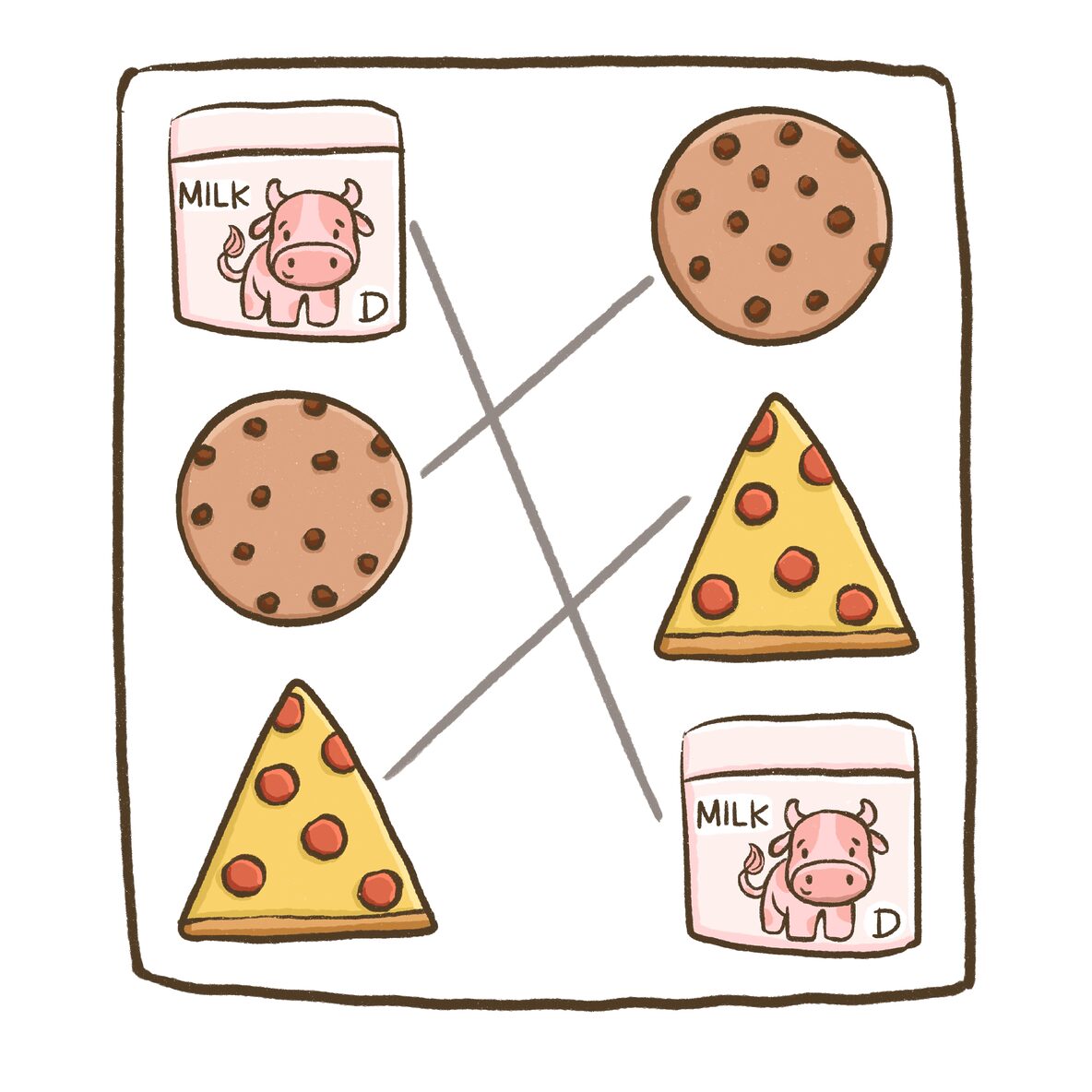
You can match things anywhere. Your child can match the condiment packs at a restaurant, or the leaves at a park. You can draw shapes on a page and ask them to draw a line showing the things that match. You can look for things that match in the books you read together or the foods on your plates.
Simple Matching Activities
- Match pairs of socks or shoes
- Find matching toys or objects
- Match pictures to real objects
- Look for matching items in books
- Find two things that are the same during play
Ready to Keep Going?
Once your child can match items that are the same, the next step is sorting objects into groups based on their differences.