


Feelings Wheel for Kids
Why Naming Feelings Matters
Young children experience big feelings, but they don’t always have the words to explain them. A child who says, “I’m mad!” might actually be frustrated, disappointed, worried, embarrassed, or overwhelmed.
Learning words for different emotions helps children begin to understand what they’re feeling and communicate it to the people around them.
And those feeling words are vocabulary words. Talking about emotions gives children meaningful opportunities to learn new language, describe their experiences, and make connections between words and the world around them.
You don’t need a formal lesson. Everyday moments, conversations, and books are wonderful places to start.
Build an Emotional Vocabulary
Start with feelings your child already knows, such as happy, sad, and mad. Then gradually introduce more specific words like excited, worried, frustrated, proud, or disappointed.
Talk about what those feelings look and feel like. You might say, “Your face is smiling and you’re bouncing up and down. You look excited!” or “That didn’t work the way you wanted. Are you feeling frustrated?”
There’s no need to quiz your child or expect them to remember every new word. Simply hearing and using emotion words in meaningful moments helps build understanding over time.
Use Books to Talk About Feelings
Books give children a safe way to explore feelings through someone else’s experience. As you read together, pause occasionally to notice how a character might be feeling.
Try questions like, “How do you think she feels?” “What makes you think that?” or “Have you ever felt that way?”
Look at facial expressions and body language in the illustrations, too. Children can often recognize a feeling in a picture before they can name it themselves.
These little conversations build emotional vocabulary while also strengthening comprehension, observation, and the ability to talk about a story.
Try the Feelings Wheel
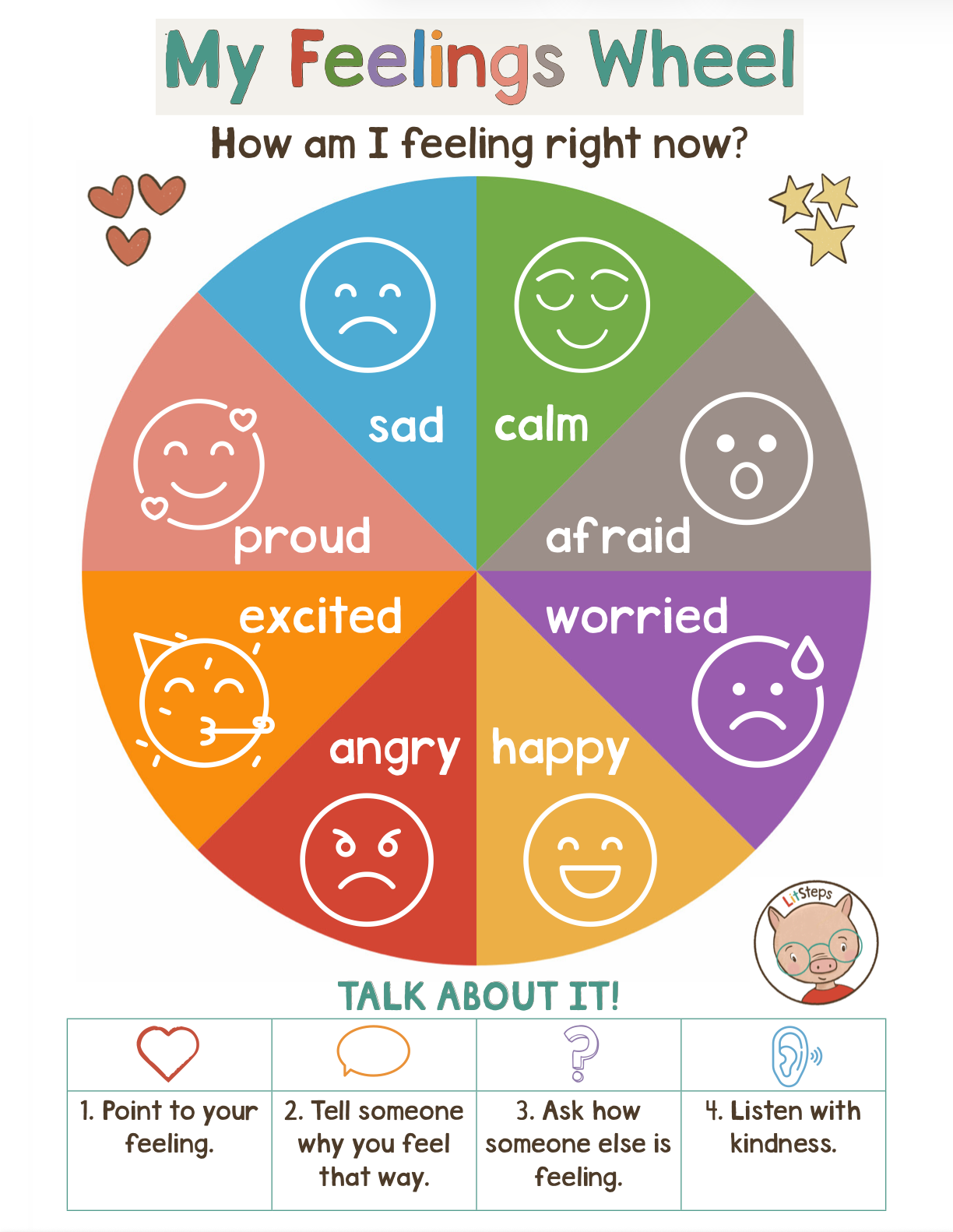
A feelings wheel gives children a visual way to explore and name emotions. Look at the faces together, talk about the different feeling words, or invite your child to point to a feeling when finding the words is difficult.
Keep it low-pressure. The goal isn’t to choose the “right” answer. It’s to help your child discover that there are words for what they’re experiencing.
You can also use the wheel while reading. Choose a character and ask, “Where would their feeling be on the wheel?” Then talk about what happened in the story that made the character feel that way.
Little Words for Big Feelings
Helping children name their feelings doesn’t require a special lesson. It happens in small conversations while reading a book, after a disappointment, during an exciting moment, or curled up together at the end of the day.
Each new word gives your child another way to understand themselves and connect with you.
One little word at a time.