

How to Teach Weather to Preschoolers Through Play
Everyday Weather
Weather is part of your child’s world every day. They feel the wind, watch rain hit the window, notice when the sun is bright, and choose what to wear before heading outside.
These ordinary moments offer simple ways to build vocabulary, observation skills, and early literacy—without turning the day into a formal lesson.
If you’re wondering how to teach weather to preschoolers, start with what your child can see and feel. A short conversation, a playful movement, or a drawing is enough to make learning meaningful.
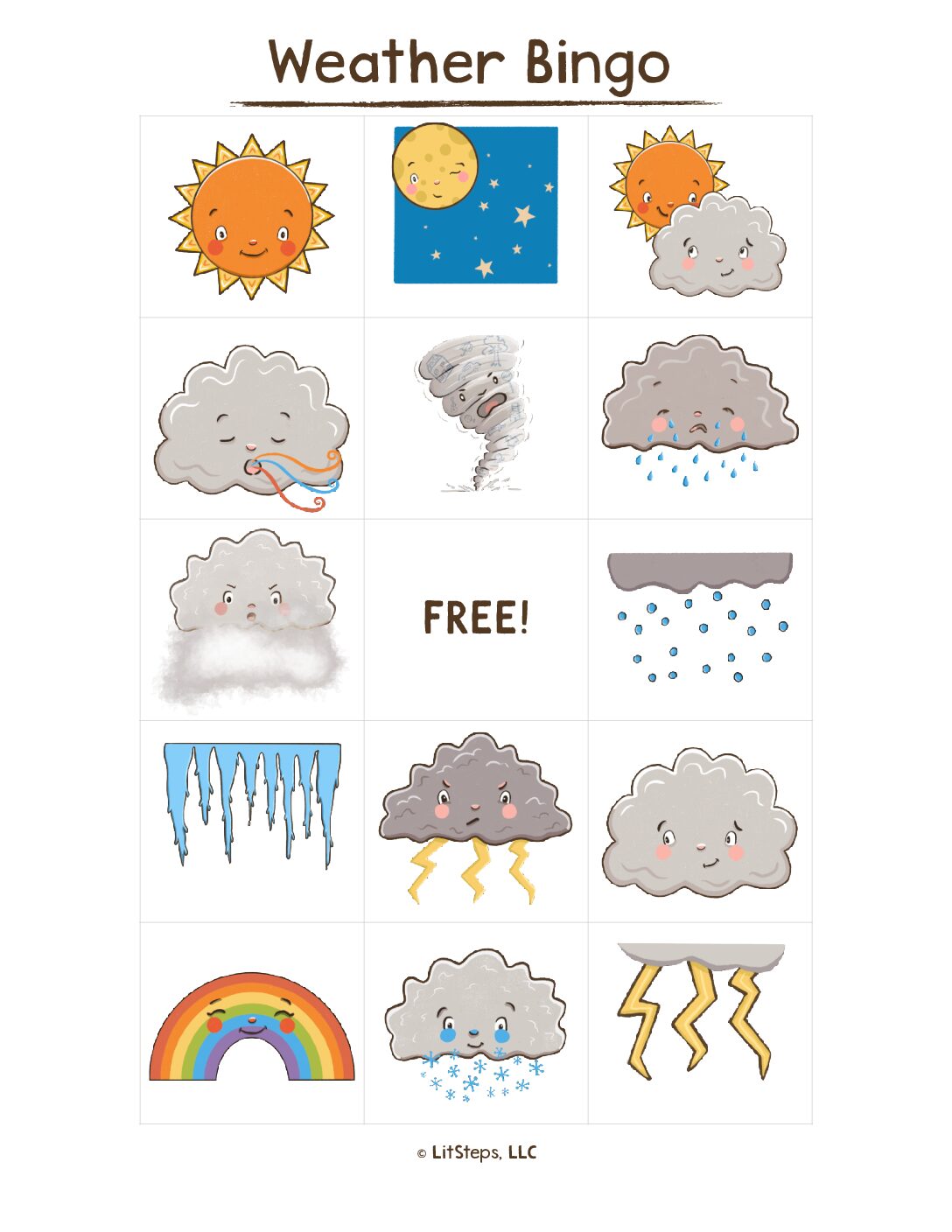
Download Your Free Weather Bingo
Keep the weather hunt going with our free Weather Bingo printable. Look for each type of weather together and talk about what your child notices
Why Learn About Weather?
Weather gives preschoolers something real to observe, describe, and discuss.When your child talks about a cloudy sky or listens to rain, they are practicing important early literacy skills. They learn to:
- Notice details
- Describe what they see and feel
- Learn to use new words
- Compare one day with another
- Ask questions and make predictions
- Connect ideas to personal experiences
These skills support the conversations, comprehension, and curiosity children need as they begin learning to read.
Start With a Daily Weather Conversation
You don’t need a weather chart or a long activity. Begin by looking outside together.
Ask a simple question:
- What do you notice today?
- What does the sky look like?
- Can you see the trees moving?
- Do you think the weather will change?
Give your child time to look, think, and answer. There is no need to correct every response. Add helpful words naturally as you talk.
If your child says, “The trees are wiggling,” you might respond, “They are moving because the wind is blowing.”
You are connecting your child’s observation to a new weather word.
Introduce Weather Words One Little Step at a Time
Begin with familiar words your child can connect to an immediate experience:
- Sunny
- Cloudy
- Rainy
- Windy
- Hot
- Cold
Once those words feel familiar, add more descriptive language:
- Bright
- Dark
- Warm
- Cool
- Foggy
- Stormy
- Breezy
- Icy
There is no need to introduce every word at once. Choose one or two that match the day, repeat them during conversation, and use them again later.
You might say, “It’s windy this morning. I can feel the wind on my face. Can you see anything moving in the wind?”
Short and sweet, then repeat.
Five Playful Weather Activities for Preschoolers
If your child enjoys learning together, our free Preschool Mini Unit is the perfect next step. You'll receive teacher-created lessons, printables, songs, and activities designed to help preschoolers build early reading skills through playful, connected learning.
1. Become a Weather Watcher
Choose a window or step outside together. Invite your child to report what they notice.
Try sentence starters such as:
- Today the sky is...
- I can see...
- I can feel...
- I think we should wear...
Your child does not need to memorize weather facts. The goal is to observe and put their observations and ideas into words.
2. Match Clothes to the Weather
Gather a few clothing items or look through your child’s closet together.
Ask:
- What would we wear on a rainy?
- Which clothes help us stay warm?
- Would we wear boots on a hot sunny day?
- What could protect us from the sun?
This playful activity combines weather vocabulary with matching, sorting, and everyday problem-solving.
3. Move Like the Weather
Invite your child to use their body to act out different kinds of weather.
They can:
- Sway like a tree in a gentle breeze
- Spin like a strong wind
- Tap their finger like falling rain
- Stomp and clap like thunder
- Float slowly like a cloud
Movement makes new words easier to understand and remember. It also gives active children a joyful way to participate.
4. Listen for Weather Sounds
Weather is something children can hear as well as see.
Listen for rain, wind, thunder, or the quiet that sometimes comes with snow. Encourage your child to describe each sound.
Does the rain patter, drip, splash, or pour? Does the wind whisper, whistle, or roar?
You can make the sounds together or invent a short weather song. Playing with sounds and descriptive words helps children notice rhythm and language.
5. Make a Weather Journal
Fold several sheets of paper into a simple booklet. Each day, let your child draw what the weather looks like.
Ask them to tell you about the picture, then write down their words. For example:
"The clouds are dark. I think it will rain."
Your child’s drawing and spoken sentence work together to tell a story. This helps them understand that pictures, spoken words, and printed words can all communicate meaning.
Keep the activity relaxed. One picture or sentence is plenty.
Connect Weather to Books & Stories
When you read together, notice the weather in the illustrations.
Ask:
- What is happening outside?
- How do you know it's cold?
- What are the characters wearing?
- How does the weather affect the story?
- What do you think might happen next?
These questions help your child use visual clues, make connections, and think beyond the words on the page.
You can also connect weather to familiar songs and nursery rhymes. Rhymes about rain, sunshine, stars, or wind build listening skills through rhythm and repetition.
Follow Your Child's Curiosity
Preschoolers often ask questions that do not have simple answers:
- Where does the rain come from?
- Why does thunder make noise?
- Where does the wind go?
- Why do clouds change shape?
You do not need to provide a perfect scientific explanation.
Try saying, “That’s a wonderful question. What do you think?”
Wondering together encourages conversation and shows your child that their ideas matter. You can look for an answer later, but curiosity is already a valuable part of the learning.
Make Weather Part of Your Everyday Learning
Teaching weather to preschoolers does not require elaborate experiments or lengthy lessons. Look outside, notice something together, and talk about it.
A windy walk, a rainy window, or a warm patch of sunshine can become an opportunity to build vocabulary, confidence, and connection.
Those small conversations add up. One observation, one new word, and one little step at a time, your child is building the early literacy skills that prepare them for kindergarten and beyond.
Continue the journey:
Explore the LitSteps Learning Path for books, songs, guided lessons, and hands-on activities designed for children ages 3–5.