
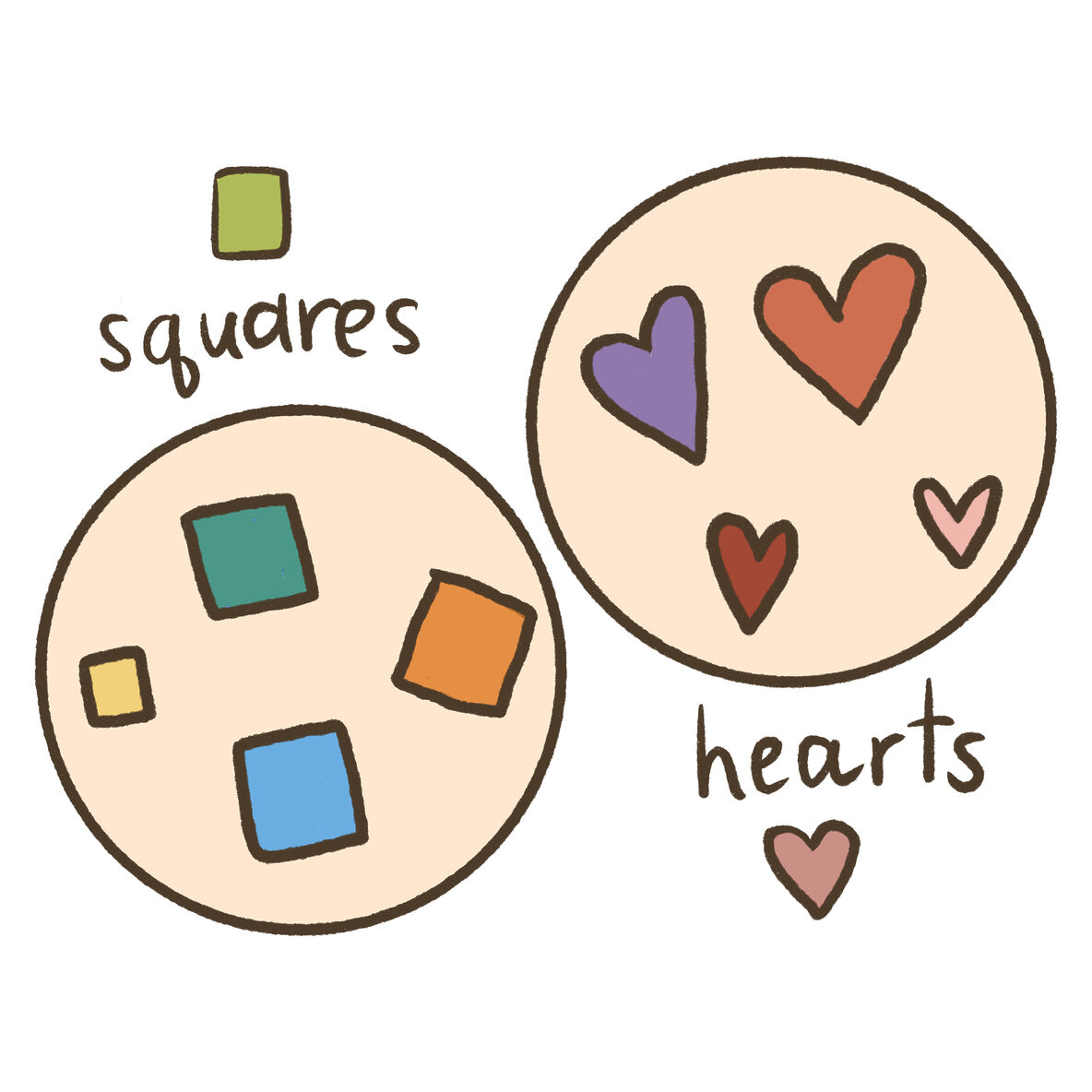

Learning to Sort
Sorting
Now that your child knows colors, shapes, and sizes, it's time to have them sort and organize similar items.
Sorting is an important thinking skill that helps children recognize patterns and relationships, and supports how early reading skills develop over time.
It's highly likely that your child is already sorting the things in their life. The foods they like vs. the ones they dislike. The toys they favor are in a place of prominence, while the rest are forgotten in a box or a cabinet. Sorting is a cognitive function that leads to more complex math concepts as they mature.
Skill Building
Why Sorting Matters
Sorting helps children group things based on similarities and differences.
This builds early problem-solving skills and prepares them for recognizing patterns, organizing information, and understanding relationships between objects.
These skills support both early math and reading development.
What is Sorting?
Sorting means putting objects into groups based on shared characteristics.
Children might sort by color, shape, size, or type.
Over time, they begin to sort using more complex ideas and multiple attributes.
How to Teach Sorting
Start with simple groups, like sorting by color or type.
Use familiar items like toys, clothes, or household objects.
Let your child choose how to sort, then talk about their choices.
Keep it simple, hands-on, and playful.
Where
Ask your child to sort the toys in their bedroom, the clothes in their drawer, or the books on their shelf. They can sort photos, magazine cut-outs, puzzle pieces, mixed pasta shapes, buttons, or that pile of junk mail you want to recycle.
Simple Sorting Activities
- Sort laundry by type or color
- Group toys by category
- Sort snacks by shape or size
- Organize items from a nature walk
- Sort objects from around the house
Ready to Keep Going?
Once your child can sort objects in different ways, the next step is learning how to use tools and materials to support early learning.